The Imperial ©1988 / 2026 "Imperial" è una testata giornalistica registrata al Tribunale di Bari R. Stampa N° 939 del 30.11.1988
© La Gaia Scienza Editrice
Privacy Police

TIBERIO DOBRYNIA IMPERIAL DYNASTY
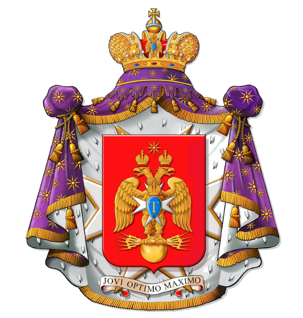
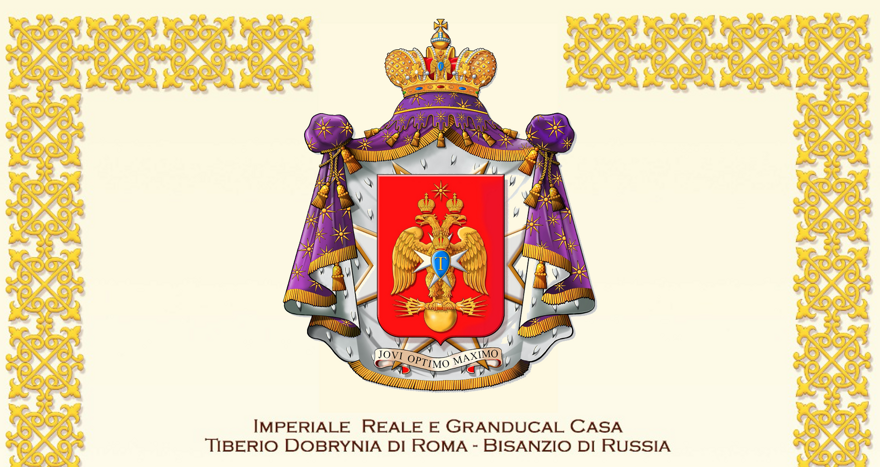
The Augusta Imperial House Tiberio di Dobrynia
is hiddem gem thet invites you to step back in time, is a name that resonates with history, culture, science and elegance nestled in a vibrant light for eternity
A historical and cultural Institution with Byzantine, Russian, and Aragonese origins dating back to the 10th century. Internationally recognized and holding various rights to the throne, the institution maintains diplomatic relations and participates in cultural and economic exchanges with various countries. The August Tiberio Dynasty of Dobrynia is an imperial, royal and grand ducal sovereign dynasty, with ancient origins: Julia, Angelos, and Rurichid lineage: from Augustus to Rurik, to Dobrynia of Novgorod, the legendary Russian prince known as "The Bold Heart," maternal uncle of Saint Vladimir I ("the Great") of Kiev and his guardian and powerful minister, to the Grand Dukes of Muscovy and the Aragonese of Naples-Sicily (Trastamara branch). Ancient lineage jure sanguinis (both paternal and maternal), legitimate descendant of the Eastern Emperors, the Angelos-Comnenus-Paleologus of Morea, the Grand Princes Dobrynia of Novgorod, Grand Dukes of Muscovy, and Tsars of all the Russias; and the Roman Princes of Orient and the Kings of Aragon of Sicily-Naples.
Head of the August House is the Grand Prince Antonio Tiberio of Dobrynia of Russia of Rome-Byzantium, pretender to the thrones of Byzantium, Muscovy, Kiev, Novgorod, and the Kingdom of Sicily-Naples.
Appellable by dynastic surnames: Julius Caesar Augustus Octavius Claudius Martius Balbus Ptolemy Angelus Flavius Valerius Comnenus Dukas Laskaris Paleologus of Morea Aragon Dimitry Vasilij Ivan Nevsky Vladimir Pruss-Rjurjk, of Russia of Rome of Byzantium Tiberius of Dobrynia.
A long and fascinating history
From the earliest oral tradition of epic songs, rich in tribal memories and pagan sacredness, from the storytellers of the year 1000 throughout the Slavic world to the subsequent Christian stratifications of written literature over the centuries, the reform of the Cyrillic alphabet was necessary to facilitate access to culture for a greater number of people. Only towards the end of the century and the early 1700s, with the advent of Peter I "the Great," did Russian history begin a slow renewal, becoming part of the grand European politics and customs of the time.
This led to the continuation of the spirit of the tradition of the Rurichid princes, which would later find ideal forms of conjunction with Renaissance models in the sciences and arts. And it is above all in the dynasty of the ancient lineage of Rijurik that one can best discern that universality of the unifying centre of Slavism which, due to its principal "otherness" to the Western world, led to the Muscovite state being considered the "third Rome" after the fall of Constantinople. Byzantine inheritance which was accepted through marriage by Tsar Ivan III when he married (1472) Zoe (later Sofia) Paleologus, niece of the last Byzantine emperor Constantine XI Paleologus of Morea.
The idea of a blood relationship between the Russian princes and the Roman emperors is discussed in Spiridon-Savva's Poslanie and the Povest' or knjaz'jach vladimirskich, which link Rijurik to the lineage of Prus, brother of Emperor Caesar Augustus (Dmitrieva 1955, pp. 162, 175, 188-189, 197, 208), who gave him the Roman lands around the Vistula, in present-day Poland, as also narrated in the Legend of the Princes of Vladimir. Ivan the Terrible shared the same view when he declared to King John III of Sweden: "We descend from Augustus, and you pass judgment on us against the will of God" (Ivan Groznyj 1951, p. 158).
Claiming an abstract Roman heritage, yet ideologically symbolic and sacred, the fulcrum of a new world to come. And the last Grand Dukes of Muscovy, who had vainly fought for the throne of their forefathers, along the original Ruric lineage of Saint Vladimir, Ivan III, and Ivan IV "the Terrible," from the initial grip of religious culture imposed for centuries with fire and sword, began to open up to other cultural horizons, between past and future, still within the bounds of the sacred, but now more illuminated by the light of science and reason.
Hence the strength and innovative grandeur of the last Dynasty of Muscovy, which already then positioned itself as an undisputed center of interculturality between the Muslim and Western worlds; with values further increased and strengthened later, between the eighteenth and nineteenth centuries, by the enlightened lifeblood and Renaissance vision brought by the princely House of Tiberius-Dobrynia, of the same lineage of Russian and Byzantine blood as those great Ruric princes of the dynasty of Saint Wladimir of Kiev and Dobrynia of Novgorod.
The narration of a superior sacred vision
May ideas arise in the spirit of internationality:
in a higher vision of the dignity of man and his role in an increasingly adrift world, which needs to return to higher courses toward broader horizons in which particularisms and divisions no longer have any reason to exist, but a new society can be refounded in the light of that desired, de-ideological interculturality which, while starting from the valorization of one's own intimate and proud personal and historical identity, can be a successful "cultural revolution"; capable of bringing East and West closer together, in full respect and dialogue of their mutual millennial cultures, in that rediscovered harmony and transcendent unity that only from above can lead to the true brotherhood of peoples, to a more just and humane, differently modern society. Only by fully respecting the respective traditions of peoples, preserving their respective identities, and engaging in more complete interaction rather than overwhelming integration, can we achieve an exchange of knowledge and narratives that can be truly culturally enriching for everyone, and not a promiscuous mix of competing ignorances.

FONS HONORUM ET JUS MAJESTATIS
In the exercise of the Fons Honorum et Jus Majestatis, the Grand Prince of Dobrynia has the faculty (Facultas) and the right (Jus) to confer new hereditary Noble titles on ancient domains with or without predicates, to recognize ancient titles claimed by ancient families who were in possession of them at the time; the possibility of decorating non-national dynastic Orders of Chivalry of Family collation; to found new ones, to revive extinct ones and reorganize their statutes; also conferring Court titles, Gratification titles, Academic titles and Honoris Causa for high merits acquired.

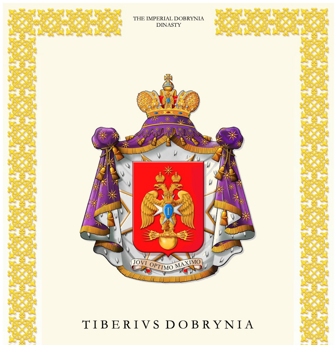
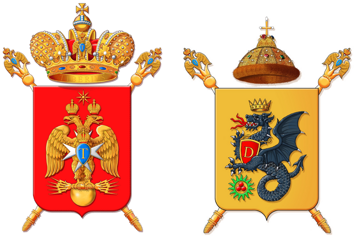
The Imperial Dynasty

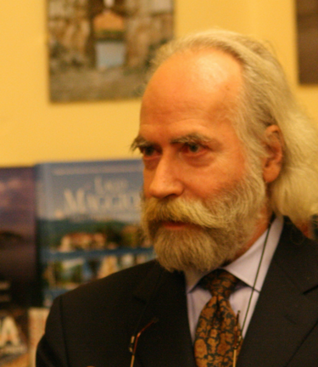

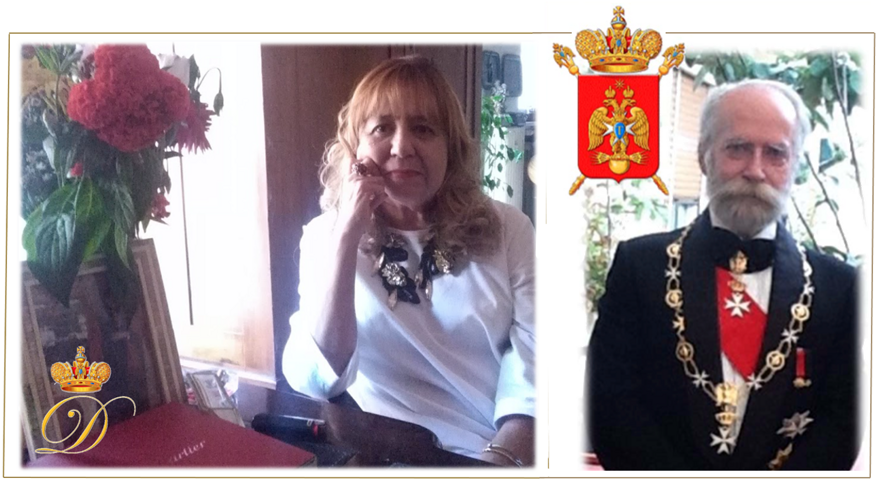
Her Imperial Highness Diva Augusta Enza D'Alonzo Tiberio Dobrynia
Grand Princess di Dobrynia
DIVA AUGUSTA ENZA I D'Alonzo Tiberio Dobrynia, Majolino Catinella dei Cognetti de Martiis, Empress and Domina Augusta, Grand Princess Imperial Royal Grand Ducal di Dobrynia di Rome-Byzantium, Grand Duchess Tsarina of Muscovy and Russia, Princess Royal of Aragon and Castile, Duchess of Naples and Sicily, Calabria and Bari, Roman Byzantine Neapolitan Patrician, Patrician of Florence and the Serenissima, Lady of Gravina di Scalea di Papasidero and Rimini, Norman Lady of the Upper Tiber, Lady of Perugia and Città di Castello. Bearing in perpetuity all the same Titles, Dignities and Prerogatives as her August Consort rhe Grand Prince Antonio.
Grand Collar of all dynastic Orders of the House Dobrynia.
His Imperial Highness Antonio Tiberio Dobrynia Grand Prince of Dobrynia
Augustus Prince Porphirogenitus Jure Sanguinis, Imperial Grand Prince di Dobrynia di Rome-Byzantium of Amorium of Phrygia and Galatia, Grand Prince and Grand Duke of Muscovy, Vladimir, Kiev, Novgorod, Tsar of Muscovy, Grand Duke of Russia, Bey and Imperial Great Khan of Enez and Dede Agatch, Imperial Prince of the Khanate of Kazan, Astrakhan, Siberia, Galicia; Royal Prince of Aragon and Naples-Sicily, Prince Royal of Norway, Sweden and Denmark, of England of Hungary of Bulgaria of Poland of France, Duke of Normandy of Hauteville, Prince of St. John of Acre and Cyrenaica, Duke of Athens of Lesbos of Greece and Durazzo, Despot of Morea of Galatia of Wallachia of Epirus, Grand Khan of the Golden Horde, Marquis of the Royal Throne of Poland, Count of Lecce, Baron of Vittoria, Norman Lord of Sannio of Biferno of the Upper Tiber, Nobleman of Perugia and Città di Castello, Roman Patrician, Patrician of Italy, Patrician of the Serenissima, Estense Patrician of Modena and Florence. Pretender to the Thrones of Byzantium, Muscovy, Kiev, Novgorod and the Kingdom of Naples-Sicily. Sovereign Grand Master of the Dynastic Orders of the House of Dobrynia.
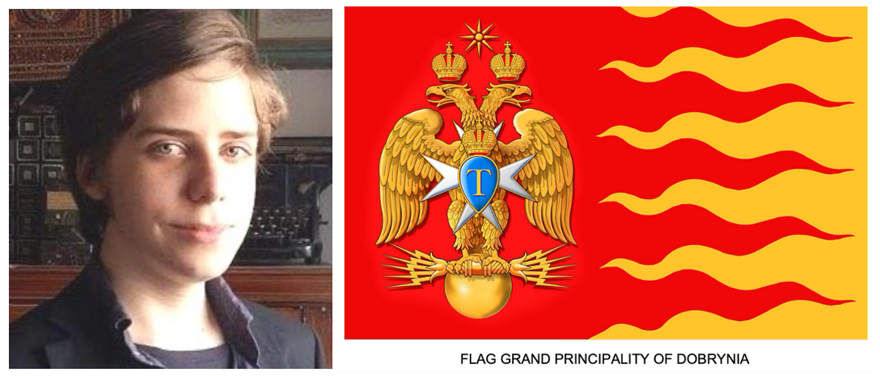
His Imperial Highness Francesco Maria Tiberio di Dobrynia, Crown Prince
Imperial Highness, Hereditary Grand Prince of Dobrynia, Prince of Byzantium, Grand Duke of Muscovy, Grand Khan, Imperial Grand Amir Timur Khan of Tartary, Mongolia, Greater Scythia and the Indies. Roman Patrician, Este Patrician of Modena and Florence, Norman Lord of the Upper Tiber. Grand Collar of all the dynastic Orders of the House Dobrynia.


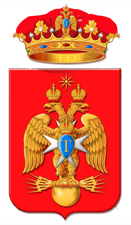
The Family Branch
Most Serene Ducal Family Branch of Dobrynia
Her Most Serene Highness the Duchess Daniela Lamanna di Dobrynia
Her Serene Highness, Her Grace, Duchess di Dobrynia, Grand Countess Palatine, Byzantine Neapolitan Norman Patrician, Lady of Rutigliano, of Cosenza.
H.S.H. The Duchess Daniela di Dobrynia
G A L L E R Y
GOVERNMENT, DIPLOMATIC RELATIONS

Credentials, partnership, government, diplomatic corps